
Protect Your Dock, Your Water, and Your Wallet
Waterfront life in Fort Myers is great, but canal dock plumbing comes with risks that many people never see until something goes wrong. When late summer storms roll through, all that extra water, wind, and wave action can turn a simple dock hose into a real plumbing threat. Not just to the dock, but to your home or business, and your drinking water.
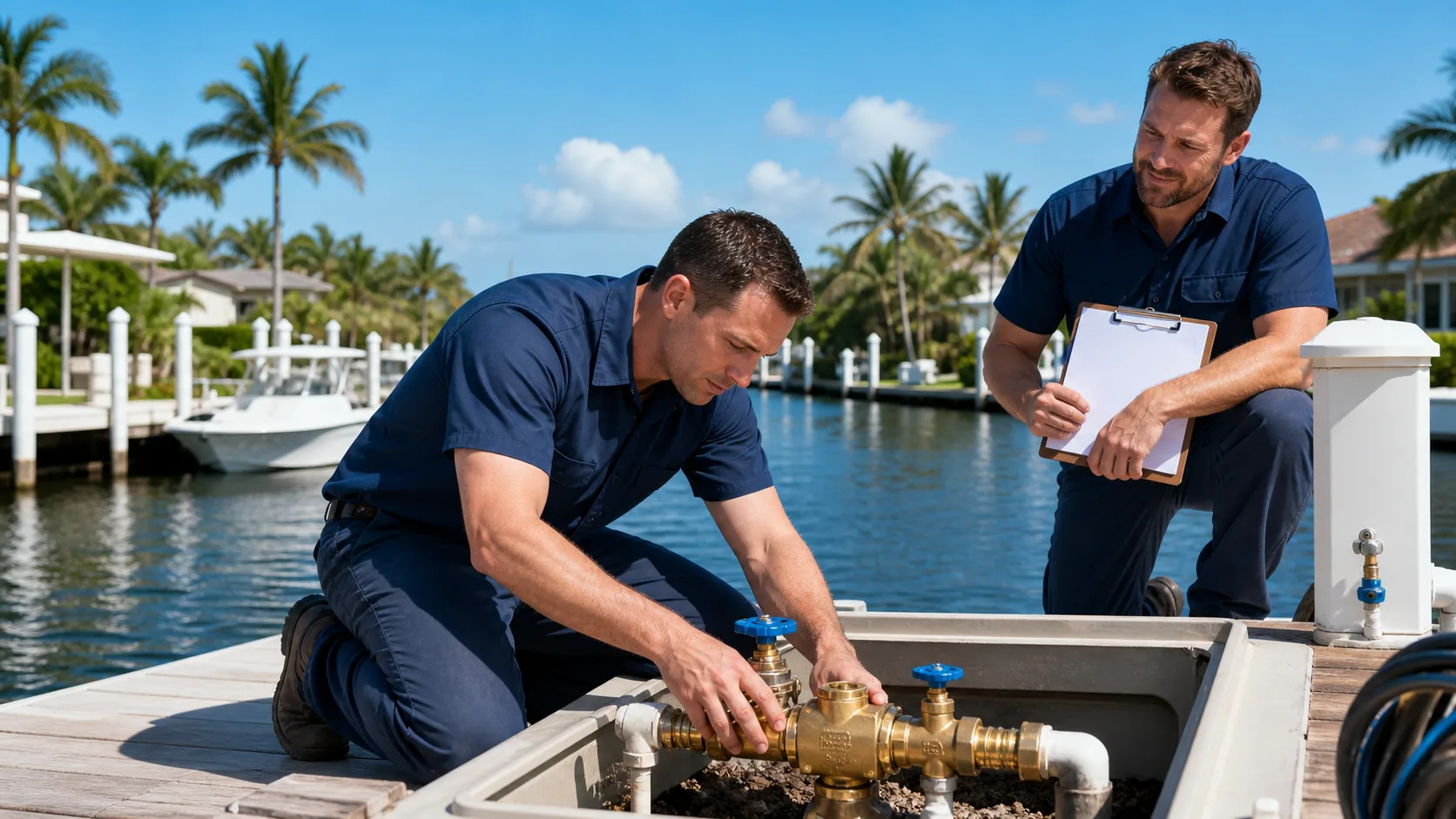
Dock line plumbing includes hose bibbs along the seawall, washdown lines for boats, water to fish-cleaning sinks, and supply lines that run all the way from the building to the dock. All of these usually tie directly into your potable water system. If they are not protected the right way, dirty canal water and debris can get pulled back toward the lines you use for cooking, bathing, and cleaning.
In this article, we break down three big areas you should understand for dock line plumbing in Fort Myers: anti-siphon protection, backflow prevention, and code-safe shutoff valves. When these are set up correctly, they help protect health, property, and even your insurance standing as storm season ramps up.
How Dock Line Plumbing Works on Fort Myers Canals
Most canal properties share a similar setup. A water line leaves the main plumbing system at the house or building, travels underground toward the seawall, then pops up near the dock. From there, it may run:
- Along the seawall to several hose bibbs
- To a washdown hose for rinsing boats and gear
- To a fish-cleaning sink or small prep area
- To separate branches that tie into irrigation
Some lines are buried, others are exposed on pilings, railings, or the dock surface. All of them are exposed to heat, sun, salt air, and constant movement from tides and wakes.
Any time water flows, pressure changes. When someone closes a hose nozzle fast, when a boat lift starts or stops, or when there is a problem in the main water line, pressure can drop quickly. That sudden drop can create a siphon effect, which can pull dirty water from a hose, a sink, or even canal spray back toward the cleaner water inside the system.
Here along the canals, you also have:
- Tidal changes that move lines and fittings
- Wakes from passing boats that slam water into docks
- Heavy summer rains that flood dock surfaces and hose connections
All of this puts extra stress on fittings and exposed pipes, which raises the risk of leaks, bursts, and contamination if the right protections are not in place.
Anti-Siphon Protection That Stops Canal Water From Flowing Back
Anti-siphon devices are small parts with a big job. They are designed to stop water from being sucked backward from the dock into the building. One common version is the hose bib vacuum breaker. It usually screws onto the hose spigot and lets air into the line if pressure drops. That simple step breaks the siphon so dirty water cannot travel back through the hose toward the potable supply.
On a typical canal property, anti-siphon protection is usually needed at places like:
- Hose bibbs on the dock or seawall
- Boat washdown lines
- Boat fill connections for tanks or live wells
- Fish-cleaning sinks or prep stations
When these devices are missing or not set up correctly, that is when trouble starts. Some common problems we see include:
- Standard hose bibbs with no vacuum breaker at all
- Anti-siphon devices installed too low or in the wrong direction
- Cheap plastic parts that crack in the sun and salt air
- Devices that are stuck, leaking, or blocked by mineral buildup
If any of this is happening, the anti-siphon part may not be doing its job. Since these fittings sit right where water, sand, and canal spray meet, they need to be chosen and installed carefully, then checked regularly.
Backflow Prevention and Current Florida Plumbing Codes
People often confuse vacuum breakers with full backflow preventers. They both help stop water from moving the wrong way, but they are not the same thing.
A simple hose bibb vacuum breaker is usually a point-of-use device. It protects that single tap or outlet. A full backflow preventer is a larger, more complex assembly that guards an entire branch of the plumbing system. It is often required where the risk of contamination is higher, such as at:
- Waterfront properties with multiple dock connections
- Commercial docks or marinas with shared lines
- Multi-unit buildings that feed several docks or common areas
Current Florida plumbing codes and local rules call for backflow protection based on the level of risk. In many cases, that means a dedicated backflow assembly at the start of the dock line, sometimes near the meter or main connection. These assemblies usually need testing on a regular schedule to stay compliant, especially in commercial or multi-unit settings.
Ignoring backflow requirements can lead to:
- Cross-contamination between canal water, hose water, and drinking water
- Failed inspections for homes, businesses, or rental properties
- Possible fines or orders to correct the issue quickly
- Insurance complications if a plumbing event leads to damage or health concerns
Backflow is not just a paperwork issue. It is about keeping the water supply safe, avoiding shutdowns, and staying in good standing with local inspectors and insurance providers.
Code-Safe Shutoff Valves and Storm-Ready Upgrades
A good dock plumbing system is not only protected from backflow, it is also easy to shut down when storms or problems come up. That is where code-compliant shutoff valves make a huge difference.
On a long dock run, it is smart to have shutoff valves:
- Near the point where the line leaves the building
- At or near the seawall transition
- At branches that feed boat washdown lines or sinks
When a valve is located where people can see it and reach it quickly, you can secure water to the dock without cutting water to the whole property. This matters a lot as peak hurricane season approaches in late August, when quick shutoff can prevent breaks, flooding, and wasted water if the dock takes a hit.
Because of the salt air, strong sun, and regular boat traffic, dock plumbing also benefits from tougher materials. Many owners choose:
- Corrosion-resistant valves and fittings
- Piping that holds up well to UV and impact
- Clearly labeled shutoffs that anyone can identify fast
- Optional smart or remote shutoff devices for extra peace of mind
Seasonal maintenance makes all of this work better. Helpful habits include:
- Pre-storm inspections of all exposed lines and fittings
- Tagging and mapping every dock-related shutoff valve
- Replacing older gate valves with more reliable styles
- Adding shields or supports to protect lines from floating debris and boat impacts
By keeping dock line plumbing in Fort Myers code-safe, clearly labeled, and easy to control, you give yourself a better shot at riding out late summer storms without surprise plumbing headaches.
Get Started With Your Project Today
If you are planning a new build, renovation, or repair, we are ready to help you protect your property with reliable dock line plumbing in Fort Myers. At A+ Plumbing Professionals, we take the time to assess your system and recommend solutions that fit your dock, budget, and long-term needs. Contact us today to schedule an appointment so we can keep your water lines performing safely and efficiently.