
A water softener can seem fine one day and suddenly leave your Cape Coral home with hard water again. Spotty dishes, stiff towels, dry-feeling skin, and white scale around faucets are frustrating at any time. In November, when holiday guests arrive and seasonal residents return, those small water problems can become much more noticeable.
We often find that a softener has not “given up” completely. It may simply be unable to regenerate the way it should. Salt bridges and failing resin are two common causes, but they need very different fixes. Accurate water softener repair in Cape Coral starts with finding out which part of the system is actually causing the trouble.
Spot Salt Bridges Before Regeneration Stops
A salt bridge is a hardened crust of salt inside the brine tank. It forms above the water level, creating an empty space below it. From the top, the tank may look full of salt, but the salt is no longer reaching the water to create brine. Without enough brine, the softener cannot flush out the hardness minerals it collected during normal use.
Cape Coral’s warm, humid conditions can make moisture control especially important. Salt can clump when it has been stored in a damp area, when the wrong type of salt is used, or when a tank stays overfilled for long periods. The system may look supplied and ready, while the salt below the bridge is doing nothing at all.
Common signs of a salt bridge include:
- A brine tank that looks full but does not seem to use much salt
- Hard-water symptoms returning even though salt is in the tank
- Little visible water movement inside the brine tank
- A softener that appears to cycle but does not restore soft water
You can carefully check for a hard salt layer by gently probing with a broom handle or another blunt tool. Do not use sharp tools, and do not force anything near internal parts of the tank. Striking or poking the wrong area can damage the tank, float assembly, or other components. If the bridge is hard to break apart, keeps coming back, or you are not sure what you are seeing, we recommend having us inspect the system.
Know When Resin Beads Are Failing
Resin beads are the working material inside the softener’s mineral tank. They attract hardness minerals, including calcium and magnesium, so the water leaving the system feels softer. During regeneration, brine should clean those minerals off the resin and prepare it for another cycle.
Over time, resin can become fouled, worn out, damaged, or depleted. Chlorine exposure, iron buildup, sediment, age, and water chemistry can all affect how well resin performs. Improper regeneration settings can also leave resin unable to do its job. Water treatment needs can vary from one Southwest Florida property to another, so the right answer is not always the same for every home or business.
Resin trouble often looks different from a simple salt issue. A softener with damaged resin may use salt and complete a regeneration cycle, yet hard water never really goes away. You may notice inconsistent water quality, lower water pressure, or even tiny resin beads showing up in fixtures. Those clues deserve professional attention because they can point to a problem inside the system rather than inside the brine tank.
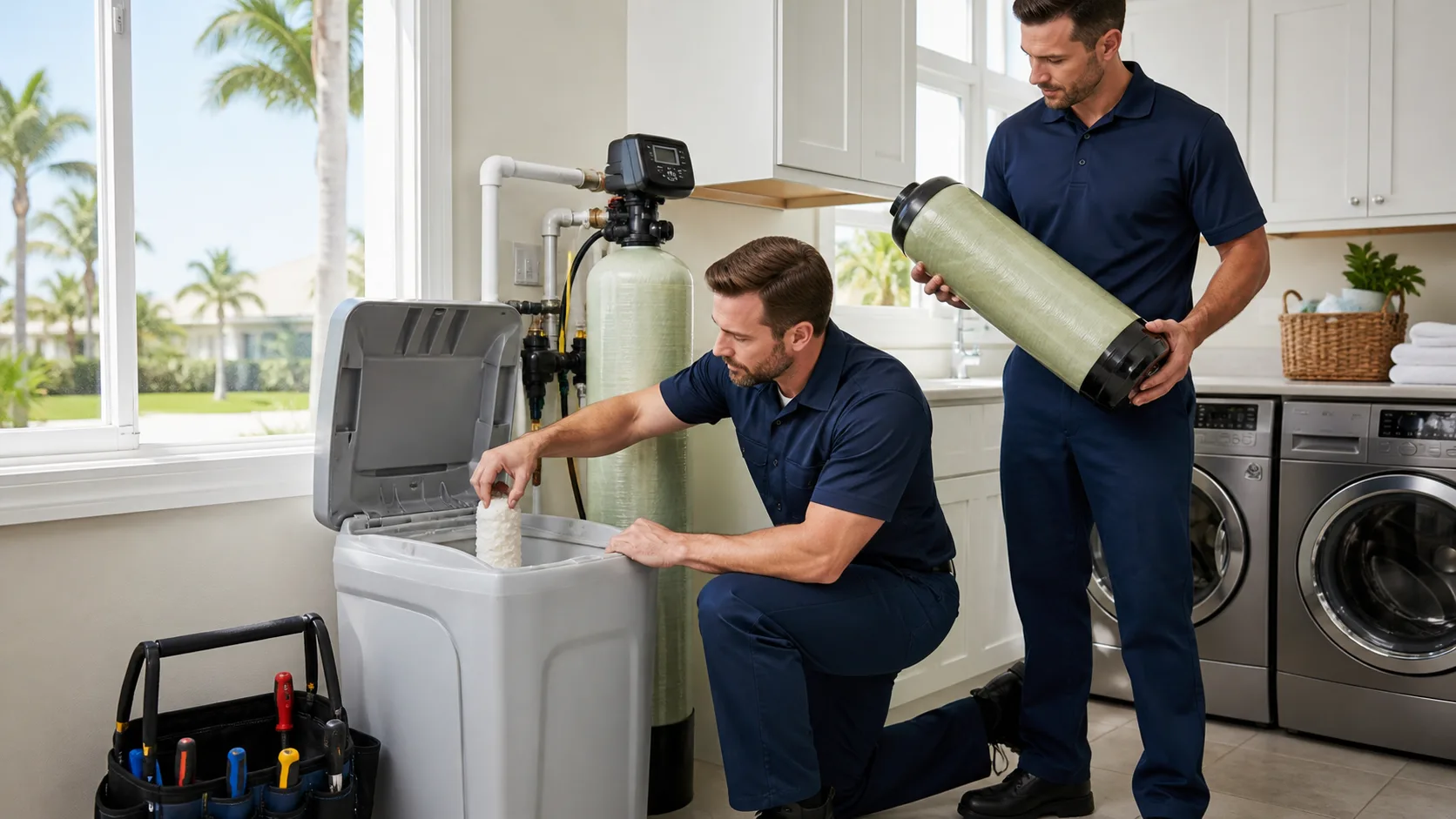
During water softener repair in Cape Coral, we look beyond the salt supply. A proper assessment can include the resin tank, control valve, injector, seals, regeneration settings, water pressure, and water quality. That helps us determine whether the system needs cleaning, a component repair, resin replacement, or a full replacement due to its condition.
Compare Brine Problems and Resin Damage
Salt bridges and resin failure can both leave you with hard water, which is why guessing can lead to wasted salt and unnecessary part replacements. The big difference is where the failure happens.
A salt bridge affects the system’s ability to make brine. The softener may appear normal from the outside, but the salt is not dissolving as intended. In many cases, correcting the bridge and checking the brine system can get regeneration back on track.
Resin damage affects the softener’s ability to remove minerals even when regeneration seems normal. The unit may cycle, draw brine, use salt, and discharge water as expected, but the resin no longer has the capacity to soften the water effectively.
Here is what you can watch for and what we recommend leaving to a trained professional:
- You can monitor salt levels and look for a visible crust in the brine tank.
- You can note changes in soap lather, laundry feel, dishes, and faucet scale.
- We can inspect resin condition, valve operation, injector performance, and seals.
- We can test water and review settings that affect regeneration and softening results.
- We can identify pressure concerns or resin loss without risking damage to the system.
A full salt tank is not proof that a softener is working. Likewise, a completed regeneration cycle does not prove the resin is still healthy. Those details matter when deciding what repair makes sense.
Protect Your Softener During the Holiday Season
November is a good time to pay attention to water treatment equipment before guests increase water use or a seasonal property sits vacant. Hard water can build scale on fixtures and put added strain on water-using equipment. Catching a softener problem early can help you avoid dealing with it when your household is busiest.
We recommend checking the brine tank about once a month and using the salt type recommended for your specific unit. Avoid piling salt too high for long periods, and do not ignore salt mushing, clumping, or recurring bridges. Keeping the brine tank clean and dry around the lid can also help reduce moisture-related problems.
Water testing and periodic system checks are especially helpful if you notice iron staining, unusual odors, sediment, pressure changes, or shifting water quality. For commercial properties, softener performance can affect fixtures, equipment, dishwashing systems, and other water-using appliances. Regular attention helps protect the plumbing system from the effects of mineral buildup.
Get the Right Answer Before Replacing Your Softener
Hard water does not automatically mean your entire water softener needs to be replaced. A salt bridge may be stopping brine production, while failing resin or a control issue may be affecting the system from inside. An informed inspection keeps the focus on the real cause rather than the most obvious symptom.
Prompt attention to poor regeneration, recurring salt bridges, and water quality changes can help restore softer water and reduce scale around your property. Before holiday visitors arrive or seasonal water use increases, a professional assessment can give you a clearer picture of what your softener needs.
Restore Reliable Soft Water With Targeted Repairs
A+ Plumbing Professionals can pinpoint the source of softener trouble and recommend the right solution for your system. Get dependable water softener repair in Cape Coral from our experienced team. We’ll help you address performance concerns with clear answers and quality workmanship.