
Water treatment in Cape Coral canal homes is not just about taste, smell, or how your coffee turns out. It affects your plumbing, your appliances, your skin, and even your outdoor spaces. If your home sits on one of Cape Coral’s many canals, your water faces some extra stress that inland homes do not deal with, so smart treatment choices matter.
In this article, we will talk through the main water issues canal homeowners run into, why testing first is so important, and which treatment options usually make the most sense. We will also touch on how better water helps protect your plumbing, septic, and irrigation systems, plus a few seasonal tips as fall kicks into gear across Southwest Florida.
Protect Your Canal Home From Hidden Water Dangers
Life in a Cape Coral canal home often means morning coffee on the lanai, afternoons on the boat, and constant water use for showers, cooking, and watering the yard. When water is such a big part of daily life, even small problems can start to feel huge.
Canal and well water in this area can bring some special challenges. You may run into salt intrusion that can leave water tasting off, hardness that leads to spots, scale, and soap that never seems to rinse clean, iron that causes rust-colored stains on fixtures and laundry, and sulfur that brings that rotten egg smell. There can also be possible bacteria that may not be visible but can still be a concern.
Making smart choices about water treatment in Cape Coral can help you enjoy:
- Better tasting and better smelling water
- Longer lasting plumbing fixtures and appliances
- Less scrubbing of orange stains in showers and toilets
- Softer skin and hair after showers
As local plumbers here in Southwest Florida, we understand how canal levels, tides, and seasonal changes can affect water quality in waterfront neighborhoods.
Why Canal Homes Face Unique Water Challenges
Living next to saltwater is great for your view, but not always great for your plumbing. When your home sits close to a canal, there is a higher chance that salty water can mix into your well or affect buried pipes and metal parts over time.
Canal area homeowners often notice patterns like high hardness that leads to white scale on faucets and shower doors, rust-colored streaks from iron on toilets, sinks, and driveways, sulfur odors from some wells (especially after heavy rain), and sand or sediment that clogs aerators and wears out valves.
Late summer and early fall bring heavy rains, higher tides, and the risk of storm surge. These changing conditions can shift the water table and affect how your well performs, push more contaminants toward your property, and stress older septic systems located near canals.
Over time, these issues can cost money in the long run, often showing up as:
- More frequent water heater and dishwasher failures
- Low water pressure from clogged pipes and fixtures
- Time and effort spent scrubbing stains instead of enjoying the water view
Testing First: A Smart Starting Point for Canal Water
Before adding any treatment system, you want to know exactly what is in your water. Even homes on the same street can have different water profiles, especially when some are on city water and others use private wells.
Professional testing can help check for:
- Hardness level
- Iron and manganese
- Total dissolved solids
- Sulfur or hydrogen sulfide
- pH balance
- Bacteria or coliform
City water and well water can both benefit from testing. City water can pick up issues in older pipes or show seasonal changes, while wells near canals can change as tides, rainfall, and pumping patterns shift.
When we look at test results, we also talk with homeowners about how they use water, because household demand and property features affect which solutions make the most sense. We consider:
- Family size and number of bathrooms
- Laundry habits and kitchen needs
- Outdoor irrigation and landscaping
- Pool fill and dock or boat washdown stations
This helps us suggest options that fit both your water and your lifestyle instead of a one-size-fits-all setup.
Smart Water Treatment Options for Cape Coral Canal Homes
Once you know what is in your water, you can pick systems that target your real problems instead of guessing.
Common solutions for canal homes include:
- Water softeners to reduce hardness and scale
- Whole-home filters to catch sediment and reduce chlorine
- Iron and sulfur filters to tackle stains and odors
- Reverse osmosis (RO) systems for clean drinking and cooking water at the sink
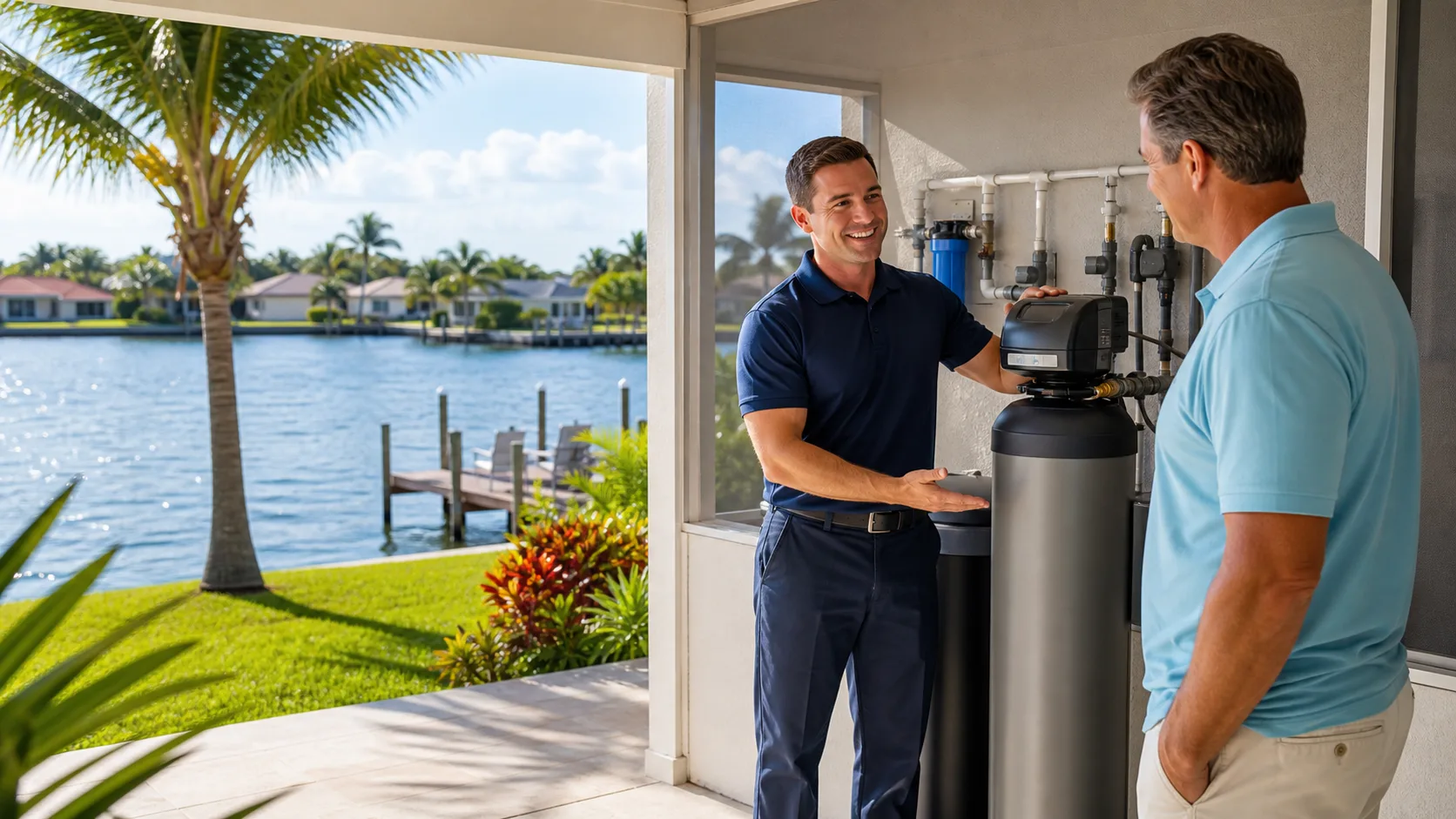
Many homes use a mix of these systems to cover multiple problems at once. For example, a typical setup might include:
- A softener to protect plumbing, water heaters, and showers
- An iron and sulfur filter to cut staining and smell
- A small RO unit at the kitchen sink for drinking water and ice
Canal homes also have some special layout needs, so the system design is not only about water chemistry. When planning systems, we look at where equipment can sit safely away from flooding risk, current plumbing routes, power access, and drain lines, and the available space in garages, side yards, or utility rooms.
Good maintenance keeps everything working well. That often means:
- Regular salt refills for softeners
- Filter changes on schedule
- Periodic professional service to check valves, timers, and media
Local experience with Southwest Florida water conditions helps systems last longer and perform better through wet and dry seasons.
Protecting Plumbing, Septic, and Irrigation Systems
Hard or contaminated water does not just look bad; it can quietly wear down every part of your home.
Inside your home, poor water quality can:
- Build scale in water heaters, which can lead to higher energy use
- Shorten the life of dishwashers and washing machines
- Clog aerators and showerheads with grit and minerals
- Pit and corrode fixtures, especially in canal areas with salt intrusion
If you have a septic system near a canal, water quality plays a role there too. Certain contaminants can increase solids and sludge inside the tank, stress the drainfield (especially during rainy months), and raise the risk of slow drains and backups.
Outside, irrigation is a big concern for canal homes. Untreated water can:
- Cause orange and brown stains on docks, seawalls, and pool cages
- Clog sprinkler heads and reduce coverage
- Cause salt and mineral buildup on plants and lawn areas
When plumbing, septic, and water treatment are planned together, your whole property works better, from the kitchen sink to the backyard hose bib.
Seasonal Tips to Keep Canal Water Clean and Safe
As fall arrives in Cape Coral, we see a mix of heavy afternoon storms, high humidity, and the early return of snowbirds and seasonal visitors. This is a good time to give your water systems a checkup so you can catch small issues before they become expensive repairs.
Smart seasonal habits include:
- Having your well and pump inspected before peak storm periods
- Watching for sudden water pressure changes or cloudy water
- Scheduling service for filters and softeners ahead of busy guest season
- Checking for leaks around hose bibs, outdoor showers, and docks
Homeowners can also help protect water quality by:
- Using lawn and dock chemicals carefully near seawalls
- Avoiding harsh drain cleaners that can harm septic systems
- Sticking to regular septic inspections and pump-outs as needed
A yearly fall water review is a simple way to spot changes early and keep your systems ready for the months ahead, when friends and family are more likely to visit and your canal home gets more use.
Get Started With Your Project Today
If you are ready for cleaner, better-tasting water throughout your home, we are here to help. At A+ Plumbing Professionals, we will evaluate your water quality and recommend the right solution for reliable water treatment in Cape Coral. Reach out today to schedule a visit, and let us design a system that fits your home, budget, and long-term needs.