
A tankless water heater should keep hot water flowing when your family needs it most, especially during the morning rush. The right size depends on how your household actually uses hot water, not simply how many bedrooms are in the house.
As the holiday season approaches, guests and seasonal visitors can put more pressure on your plumbing system. We help Fort Myers families look at their real routines, water source, fixtures, and utility setup before choosing a tankless water heater in Fort Myers.
Keep Every Morning Shower Comfortable
A properly sized tankless unit heats water on demand, so it can provide a continuous supply while it is running. That sounds simple, but an undersized unit may struggle when several people need hot water at once. The result can be reduced flow, cooler showers, or a frustrating wait for one appliance to finish before another can run.
Home size can offer a starting point, but it does not tell the whole story. A smaller home with two showers running at the same time may need more hot-water output than a larger home where everyone showers at different times.
November is a smart time to think ahead. Holiday gatherings, overnight relatives, and returning seasonal residents can all change the way a home uses hot water. Planning now can help you avoid surprises when the house is full and everyone is getting ready at once.
Measure Peak Demand, Not Household Size
When we size a tankless system, we focus on your busiest hot-water period. For some families, that is early morning, when showers, bathroom sinks, and kitchen cleanup happen close together. For others, it is evening bath time, followed by dishes and laundry.
Start by thinking about which fixtures and appliances may run at the same time. A family of four with staggered shower times may have lower demand than a family of three using two showers, a dishwasher, and a washing machine all at once.
It helps to make a simple list of your typical high-use times, including:
- Morning showers and bathroom sink use
- Evening baths, showers, and bedtime routines
- Dishwashing after meals or holiday gatherings
- Laundry loads that run during other hot-water use
- Overnight guests who may add another shower to the schedule
Flow rate matters, too. Low-flow showerheads may use about 1.5 to 2 gallons per minute, while standard showerheads may use 2.5 gallons per minute or more. Kitchen and bathroom faucets, dishwashers, and washing machines can add to the total. Whenever possible, we recommend checking fixture labels and appliance manuals instead of relying only on broad online estimates.
Match Flow Rate to Fort Myers Temperature Rise
Tankless water heaters are rated by the number of gallons of hot water they can produce per minute at a certain temperature rise. Temperature rise is the difference between the water entering the home and the temperature you want at the fixture.
For example, many households set hot water near 120 degrees. Even in Southwest Florida, incoming water still needs to be heated to reach a comfortable household setting. The needed temperature rise may change throughout the year and may also vary based on the home’s water source.
Water from a well can arrive at a different temperature than water from a municipal supply. That difference affects how much work the tankless unit must do while supplying showers, faucets, or appliances. A model that performs well during one part of the year may not deliver the same flow under less favorable conditions.
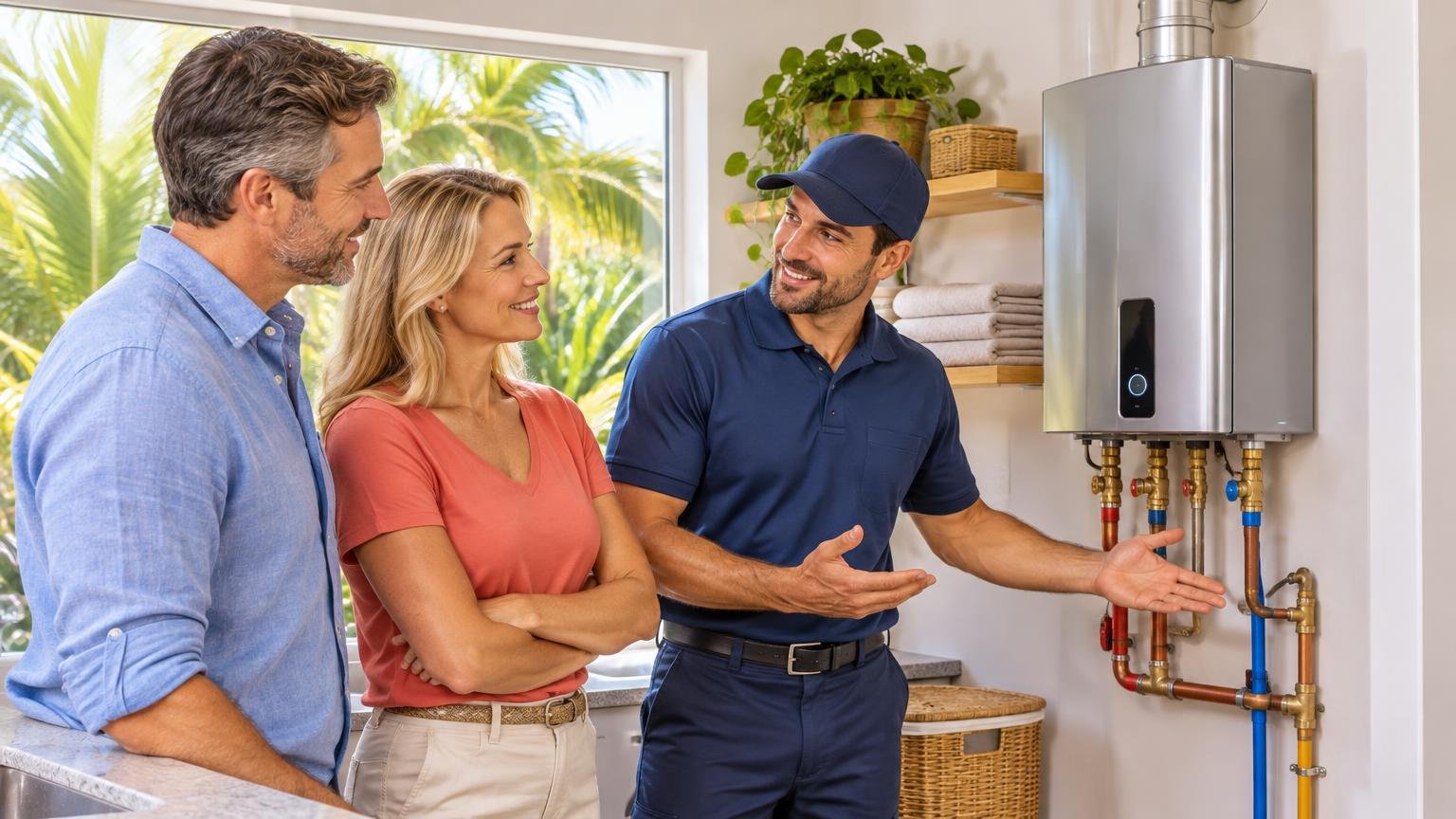
This is why we size a tankless water heater in Fort Myers for the conditions your home can reasonably expect, not just the warmest days. Our plumbing team can consider incoming water temperature, desired water setting, and the number of fixtures that may operate at once. That full calculation helps prevent lukewarm water or weak flow during busy times.
Compare Fuel, Electrical, and Installation Needs
Tankless water heaters come in gas and electric options, and each has different installation needs. Gas units can often support higher whole-home flow rates, but they may need enough gas-line capacity, proper venting, combustion air, and a safe installation location. Electric models do not need gas venting, but they can require substantial electrical capacity and dedicated circuits.
Replacing a traditional tank water heater does not always mean a tankless unit can use the same connections. Existing infrastructure plays a big role in choosing the right model.
During a professional review, we look at items such as:
- Gas-line size and available fuel supply
- Electrical panel capacity and required circuits
- Vent routes and available installation space
- Water-line condition and drainage needs
- Local code requirements and manufacturer directions
Older homes may have limited electrical capacity or gas piping that was sized for a conventional tank. A unit can only perform as intended when the surrounding plumbing, fuel, electrical, and venting systems support it. Proper installation is just as important as selecting the right flow rate.
Plan for Guests, Growth, and Water Quality
Your current routine is important, but it should not be the only thing considered. Families grow, children’s schedules change, and holiday guests can turn a quiet home into one with several people waiting for showers. If you regularly host relatives or have multigenerational family members at home, we may recommend planning for an additional shower or other future demand.
Water quality deserves attention as well. Mineral content, sediment, and other conditions can affect a tankless unit’s heat exchanger over time. This can be especially important for homes with well water. Water treatment, filtration, and periodic professional flushing may help protect performance and support a longer equipment life.
Online sizing charts can be useful for basic research, but they cannot inspect your water source, fixture flow rates, utility connections, or installation space. We take the whole home into account so you can avoid paying for more capacity than you need or ending up with a system that cannot keep pace.
Professional Sizing Before Holiday Guests Arrive
Before holiday visitors arrive, it helps to gather a few details about your home: the number of hot-water fixtures, when your family uses them, expected guests, water-source information, and any known concerns with your gas line or electrical panel. Those details give us a clearer picture of the demand your new system will need to handle.
The best tankless choice is one that fits your real life, including busy mornings, meal cleanup, laundry days, and a fuller house during the holidays. Professional sizing helps make sure the unit, installation requirements, and water conditions all work together for dependable hot water.
Get a Tankless System That Performs When You Need It
A+ Plumbing Professionals can help you choose and install a tankless water heater in Fort Myers that supports your household’s daily demand. We’ll answer your questions, explain your options, and provide clear recommendations for your home. Take the next step toward efficient, reliable hot water with a team you can trust.