
Keep Hot Water Flowing All Year in Fort Myers
Hot water should be simple. Turn the tap, get a steady stream, no strange smells, no surprises. In many Fort Myers homes, though, small water heater issues slowly build up until you are stuck with lukewarm showers, rusty water, or a mystery puddle near the tank. A steady, simple maintenance schedule can prevent most of these headaches.
Southwest Florida’s hard water and constant heat are tough on water heaters. Minerals settle in the tank, parts wear out faster, and small leaks can turn into big problems. With a little planning each year, you can help your system last longer and work better.
Here we will walk through how often to flush your heater, when to check the anode rod, how to test the temperature and pressure (T&P) relief valve, and where to place leak sensors. We will also share clear signs that it is time to call for emergency water heater help in Fort Myers before damage spreads.
Know Your Water Heater and Fort Myers Conditions
Before planning any maintenance, it helps to know what kind of water heater you have. Different systems need slightly different care.
Most homes in our area have one of these setups:
- Tank water heaters: store a big amount of hot water in a tall metal tank
- Tankless water heaters: heat water as it passes through, with no big tank
- Gas models: use gas burners and a flame to heat the water
- Electric models: use heating elements inside the tank or unit
Tank systems usually need more flushing and tank checks. Tankless units still need attention, but the focus is more on cleaning the internal passages and checking filters.
Fort Myers water tends to have more minerals that settle inside your heater. Over time, that can:
- Shorten the life of the heater
- Make it work harder to heat water
- Raise your electric or gas bill
A simple way to stay organized is to grab a waterproof label or tape and mark these right on the tank or nearby wall:
- Install date
- Warranty end date
- Date of last full flush
- Date of last anode rod and T&P valve check
This quick label becomes your cheat sheet every time you walk past the heater.
Seasonal Flushing Schedule for Cleaner, Hotter Water
Sediment is one of the biggest enemies of water heaters in Fort Myers. Hard water leaves mineral flakes on the bottom of the tank. When enough builds up, you may hear rumbling or popping sounds as water bubbles through the layer. You can also end up with less hot water and higher power bills.
A simple schedule that works for many local homes looks like this:
- Quick flush every 6 months
- Full tank drain and flush once a year, in early fall before holiday guests show up
The idea is to keep sediment from ever getting a chance to pile up.
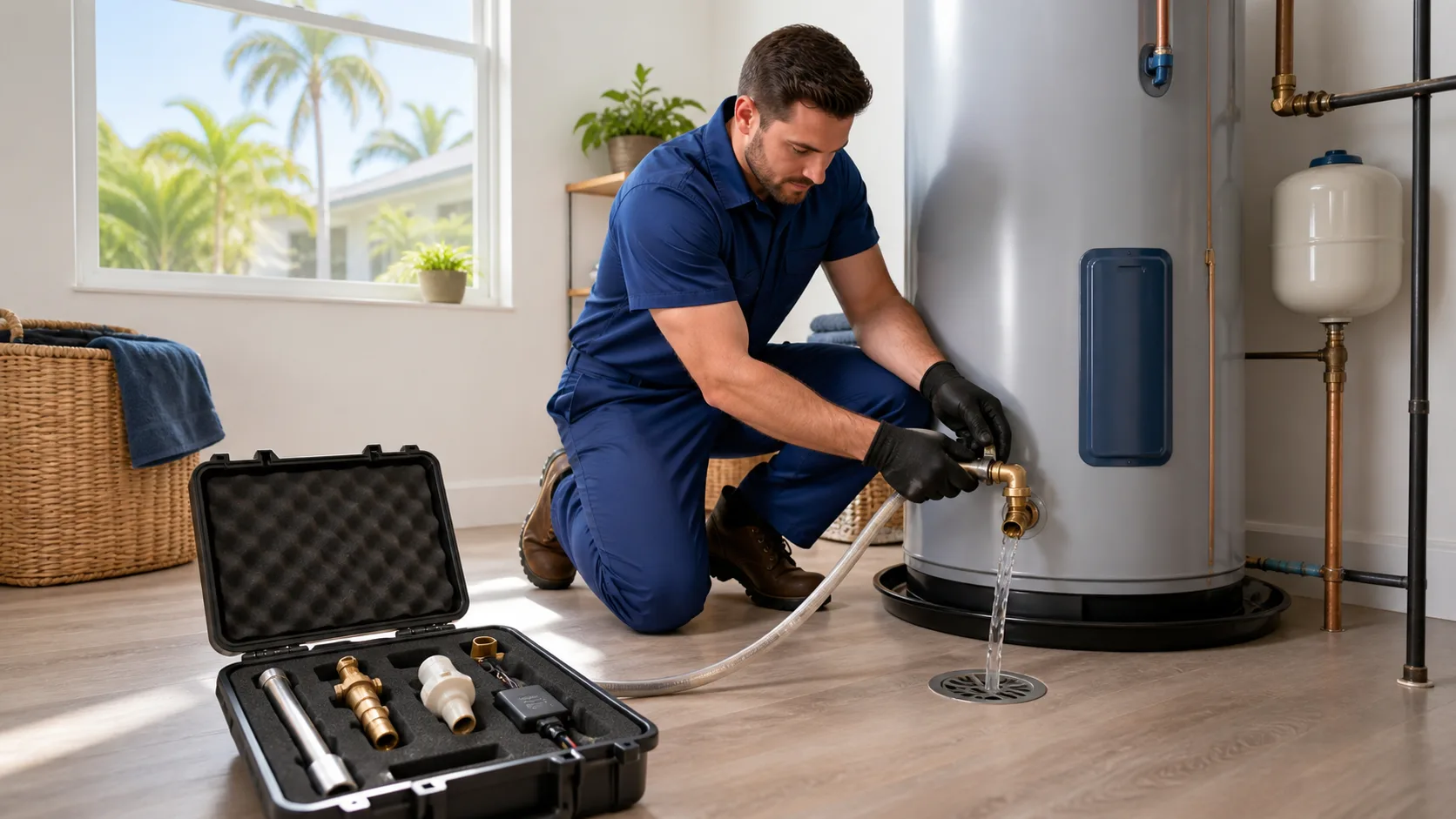
There are some basic steps many homeowners can safely handle at a high level, as long as they follow safety rules and feel comfortable:
- Turn off power to an electric heater at the breaker, or turn gas control to OFF on a gas unit
- Turn the cold-water supply valve off
- Attach a garden hose to the drain valve at the bottom of the tank
- Open the valve and drain a few gallons for a quick flush
A full drain and deep flush usually needs more care. It can involve:
- Handling very hot water
- Opening and closing several valves in the right order
- Checking for leaks when refilling
- Restarting the gas burner or electric heating safely
Because of the heat, pressure, and risk of leaks, it is smart to have a professional handle the full yearly flush, especially if you notice heavy sediment when you open the valve.
Anode Rod and T&P Valve Checks That Prevent Disasters
Inside most tank water heaters is a metal rod called the anode rod. Its job is to slowly break down so the tank walls do not. In our area, the minerals in the water can eat through this rod faster, which is why a check every 1 to 2 years is a good idea, sometimes more often if you know your water is very hard.
Common warning signs that the anode rod may be worn out include:
- Rotten egg or sulfur smell from hot water
- Brown, yellow, or rusty-looking hot water
- More sediment when flushing the tank
If the rod is gone and the tank starts to rust instead, the next step is often a leak or tank failure. Once the tank wall is damaged, replacement is usually the only safe option, so catching a bad rod early matters.
The T&P relief valve is another small part with a huge job. It is usually on the top or side of the tank and has a discharge pipe running down. If pressure or temperature inside the tank gets too high, this valve opens to release water, which prevents the tank from bursting.
At least once a year, the T&P valve should be checked. This test needs care because:
- The water inside the tank is very hot
- Opening the valve suddenly can spray hot water if the pipe is not set right
- A stuck valve that will not reset can cause constant dripping
Because of the risk, many homeowners prefer to have a trained plumber handle T&P tests and any needed replacements during an annual water heater visit.
Smart Leak Sensor Placement and Emergency Protection
A small water heater leak can turn into a big mess, especially in Fort Myers condos or homes with heaters in closets, garages, or attics. Water can soak walls, floors, and nearby rooms before anyone sees it. That is when a simple problem can become a full emergency water heater in Fort Myers situation.
Leak sensors are a smart layer of protection. Good spots for them include:
- Under the tank, where water would drip first
- Inside or next to the drain pan under the heater
- Near any expansion tank or connected piping above the heater
- Along nearby walls or baseboards where water would run
Today there are smart leak detectors that connect to phone apps. Some can tie into shutoff valves that stop the water supply when they sense a leak. These tools are especially helpful during fall and winter travel season, when families leave home for holidays and do not walk past the heater every day.
Placing sensors correctly and making sure they work with your plumbing system is easier with a professional who knows common leak paths in local homes.
When to Call the Pros for Emergency Water Heater Help
Even with a good maintenance schedule, things can go wrong. Certain warning signs should never be ignored and need fast professional help.
Red flags include:
- No hot water at all from any tap
- Visible rust, corrosion, or damp spots at the base of the tank
- Constant dripping or streaming from the T&P valve discharge pipe
- A tank that looks bulged or misshapen
- An electric water heater that keeps tripping the breaker and will not reset
- Any smell of gas near a gas heater
- Pooling water around the heater or water stains spreading on nearby walls or ceilings
These can point to serious issues inside the tank, in the gas or electric controls, or in the safety systems. Fast response helps limit water damage, protect nearby rooms from mold, and keep your home safe.
For both homes and light commercial spaces, a skilled plumbing team can inspect the system, find the true cause, and guide you on safe repair or replacement options so you are not stuck without hot water any longer than needed.
Restore Hot Water Comfort In Your Home Today
If your water suddenly runs cold or your water heater starts leaking, we are ready to respond quickly and get your hot water back on. For fast, reliable help right when you need it, schedule service for your emergency water heater in Fort Myers with A+ Plumbing Professionals. Our licensed technicians will assess the problem, explain your options clearly, and complete the repair or replacement with minimal disruption. Reach out now so we can get your home comfortable again as soon as possible.