
How Estero Homeowners Can Protect Septic Systems After Storms
Heavy rain can turn a septic system problem from “out of sight, out of mind” into a big mess very fast. In Estero and across Southwest Florida, late summer brings tropical systems, daily downpours, and soaked yards, so septic systems work under extra stress.
When the ground gets saturated, even a system that seemed fine last week can struggle. Wastewater has nowhere to go, drains slow down, and in serious cases, sewage can back up into the house or bubble up in the yard. Knowing what is normal after a big storm and what means you may need septic tank repair in Estero helps protect your home, your health, and your property value.
We work with septic systems every day in this area, so we see how local soil, a high water table, and repeated storms affect tanks and drain fields. In the sections below, we explain how heavy rain affects your system, warning signs to watch for, when to wait and when to call for help, common post-storm repairs, and simple habits that can keep your system safer during storm season.
How Heavy Rains Overwhelm Your Septic System
Most of the trouble starts where you cannot see it, under the ground. After long or heavy rain, the water table rises. The soil around your drain field becomes soaked, like a wet sponge that cannot take in one more drop. When that happens, wastewater from your tank has nowhere to go, so it backs up in the system.
Runoff from roofs, driveways, and nearby yards makes this worse. Standing water can push extra soil and debris into the lines, clogging or coating the drain field so it does not absorb well. In some parts of Estero, nearby canals and ponds can keep the ground wetter for longer, which slows down how fast the area around your drain field can dry out.
There is a difference between:
- A system that drains a bit slower for a day or two while the yard dries
- A system that has real damage or failure and needs septic tank repair in Estero
If you notice minor slow drains that clearly get better as the sun comes out and the yard firms up, that can be normal after a major storm. But if each new rain brings the same problems back, or the drains never really recover, that points to trouble that a professional should check.
Warning Signs Your Septic Tank Needs Attention Now
Right after a big storm, your home will often give you clues that the septic system is struggling. Inside the house, early warning signs include:
- Slow drains in more than one sink, tub, or shower
- Gurgling sounds when toilets flush or when water runs
- Bad smells from drains shortly after rainfall
Outside, your yard can also show signs that the drain field is overloaded:
- Soggy, spongy, or squishy spots near the septic area
- Puddles that smell like sewage
- A strip of grass that looks extra thick and bright green over the drain field
Some signs are more serious and should never be ignored. Sewage backing up into tubs, showers, toilets, or floor drains is an emergency. Waiting to see if it “dries out” can lead to more damage, health risks, and a bigger mess in your home.
Many people try to fix these issues with drain cleaners or a plunger. That may help a simple clog inside the house, but it will not solve a rain-soaked drain field, a full tank, or broken parts in the system. We always suggest that homeowners and property managers make notes and take photos of what they see, including:
- Where the problem showed up
- What time it happened
- How long after the storm it started
Sharing that information with a septic technician can make it easier to find the root cause.
When to Wait and When to Call for Septic Tank Repair in Estero
After a heavy rain, some minor changes are to be expected. It can be okay to wait and watch for a short time if:
- Drains are only slightly slower but improve within a day or two
- There is a faint odor outside that fades as the yard dries
- You do not see any sewage backing up inside or pooling on the lawn
You should plan for septic tank repair in Estero or at least a professional inspection when:
- Backups or slow drains return after every storm
- There is standing sewage or foul-smelling puddles in the yard
- Problems last even after several dry days with no more rain
Digging in the yard or opening the septic tank yourself is not a good idea. Tanks can hold harmful gases, and buried pipes or parts can be easy to break if you are not sure where they are. What feels like saving time at first can lead to much bigger repairs later.
It is almost always easier and less stressful to address a septic issue early, before the system fails fully or spreads contamination to nearby soil or water features. A trained team can inspect, diagnose the cause, and explain whether pumping, clearing lines, adjusting usage, or more extensive repair makes the most sense, instead of jumping straight to replacement.
Common Post-Storm Septic Repairs in Southwest Florida
After heavy rains in our area, we see the same types of repair needs again and again. Some of the most common include:
- Pumping an overfull tank that no longer has enough room to hold and separate wastewater
- Jetting or clearing lines that filled with debris, grease, or solids that shifted during storms
- Working on drain fields that are overloaded, compacted, or no longer absorbing properly
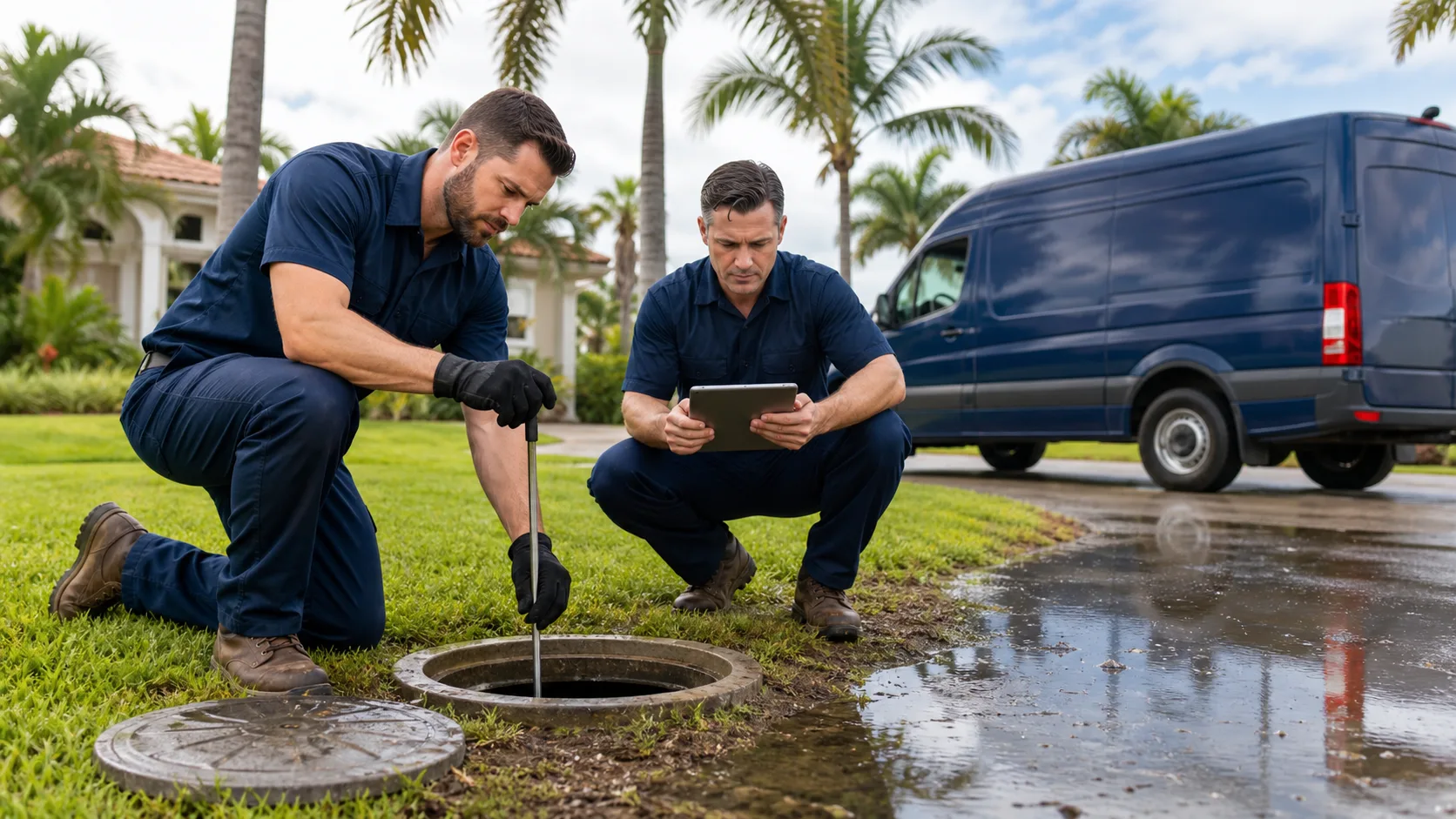
To understand what is really going on, technicians will usually:
- Check liquid levels inside the tank
- Look for signs of backflow toward the house
- Evaluate how saturated the soil is around the drain field
- Test how well the system recovers after use
Older or undersized systems can struggle more after storm season. Repeated soaking often reveals weak spots that were hidden when the ground was dry. Some repairs can also boost long-term reliability, such as fixing worn baffles, adding risers so the tank is easier to service, or suggesting changes to daily water habits.
Larger properties like commercial buildings and multifamily housing in Estero can face even more stress, since more people use water and send waste into the same system every day. For those, regular inspections and maintenance after the rainy months are especially helpful.
Simple Storm Season Habits That Protect Your Septic System
You cannot control the rain, but you can lower the strain on your septic system before, during, and after storms. A few simple habits go a long way:
- Spread out laundry loads across the week
- Take shorter showers when the yard is soaked
- Wait to run the dishwasher until the ground starts to dry
Try not to drive, park, or place heavy items over the drain field, especially when the soil is wet. Extra weight can compact the ground and make it harder for wastewater to filter away.
It also helps to keep gutters, downspouts, and yard grading pointed away from the septic area. Less runoff means less water for the drain field to handle. Many homeowners find it helpful to schedule routine pumping and checkups before the peak of hurricane season so the tank starts the wet months in good shape.
A local plumbing and septic team that understands Estero’s soil and rain patterns can also help you set up a maintenance plan that fits your property size, household water use, and yard layout. That way, when the next round of storms rolls through, your septic system has the best chance to keep working the way it should.
Get Started With Your Project Today
If you are noticing slow drains, foul odors, or pooling water in your yard, our team at A+ Plumbing Professionals is ready to help restore your system quickly and safely. Schedule professional septic tank repair in Estero so we can inspect the problem, explain your options, and recommend the right fix. We work efficiently, respect your property, and focus on long-term solutions, not quick patches. Reach out today so we can get your septic system working properly again.