

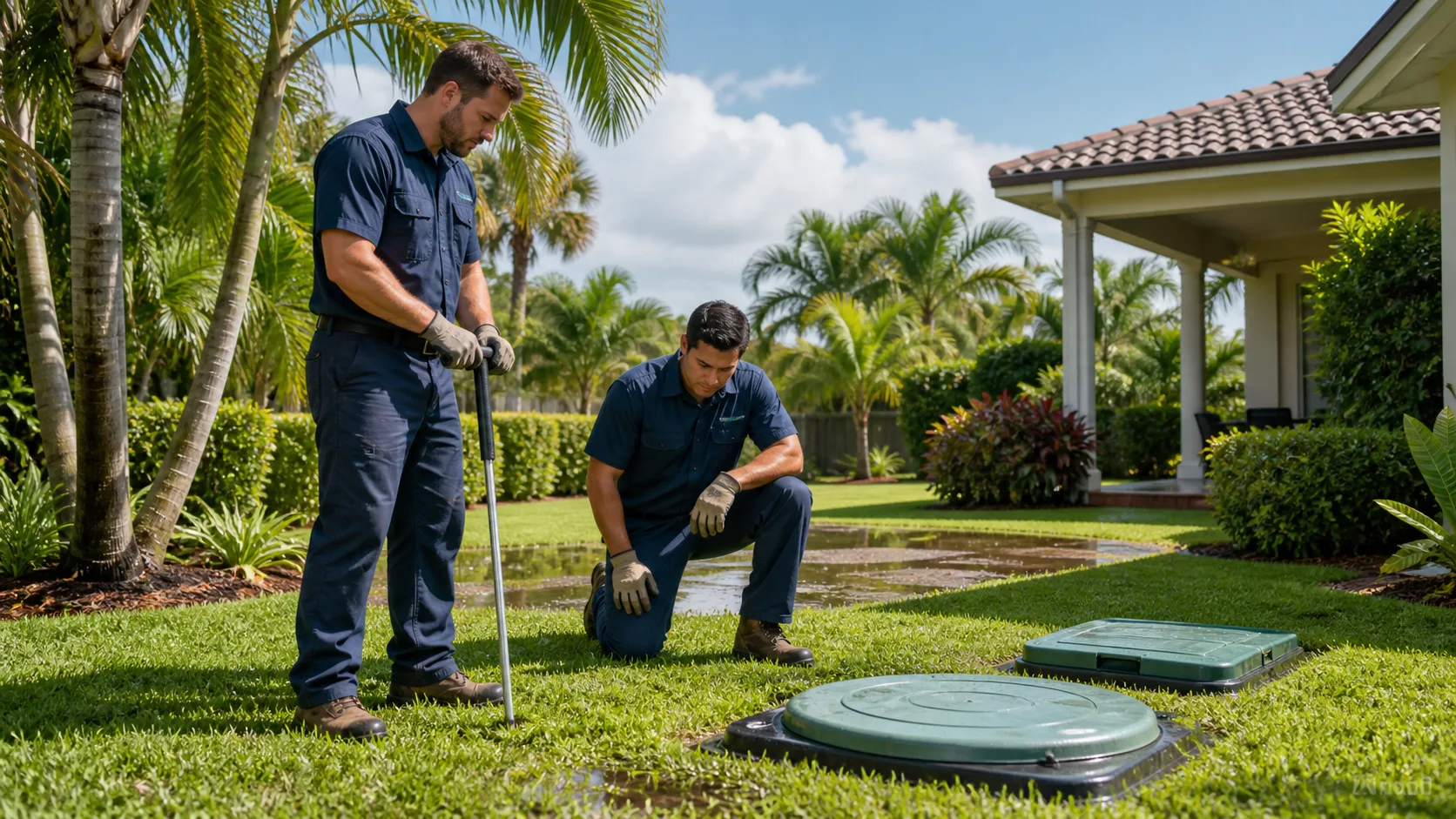
Heavy summer rains in Naples can be tough on septic systems. When the ground stays soaked, your drain field may not be able to handle normal household water use, and problems show up fast. Knowing how to protect your drain field before and after storms can help you avoid mess, stress, and major repairs.
In this guide, we will explain how heavy rain affects your drain field, what warning signs to watch for, and what simple habits can lower your risk of system failure. We will also talk about when repairs might be enough and when it is time to think about drain field replacement in Naples.
Protect Your Naples Drain Field Before Rains Hit
Late summer rains in Southwest Florida often come day after day. Older or marginal septic systems can get overloaded quickly when the soil around the drain field is already wet. If the ground cannot absorb more water, sewage has nowhere safe to go.
A drain field is the network of perforated pipes and gravel-filled trenches that spread wastewater from your septic tank into the soil. The soil then filters and treats the water. If the drain field stops working, your whole septic system is in trouble, even if the tank itself seems fine.
Preventing damage is usually far easier than paying for a full drain field replacement in Naples. Simple steps before the rainy season can extend the life of your system and lower the chance of backups.
We serve many homeowners in the Naples area, and we know how local soil, high groundwater, and older systems can combine to create problems. Honest inspections and practical advice are often all it takes to stay ahead of big issues.
How Heavy Summer Rains Trigger Drain Field Failure
Southwest Florida soils can stay saturated when strong storms roll through day after day. Rising groundwater and standing surface water reduce how much extra wastewater the ground can take. When your drain field is sitting in wet soil, it cannot release water like it should.
Common warning signs that heavy rain is overwhelming your drain field include:
- Slow drains all over the house, not just in one sink
- Toilets that gurgle when you flush or when other fixtures drain
- Wet, spongy, or bright green patches in the yard above the field
- Sewage odors outdoors or, worse, inside your home
- Sewage backing up into tubs, showers, or floor drains
Sometimes, you may see mild slowdowns only while a big storm is passing through, and the system recovers within a short time after the ground starts to dry. That can be a sign of stress, not total failure. True drain field failure usually shows up as long-term ponding, repeated backups, or odors that do not go away even after pumping the tank.
In Naples, flat lots, compacted fill dirt, and older septic systems can make properties more vulnerable, especially after repeated downpours. When the water has nowhere to drain, your system feels the strain.
Smart Yard and Water Use Habits Before the Storms
Good habits before the rainy season can protect your drain field and give it a better chance of keeping up when the sky opens up.
Helpful yard and landscaping practices include:
- Direct roof runoff away from the drain field with gutters and downspouts
- Avoid planting water-loving trees or large shrubs over the field
- Keep heavy vehicles, boats, and storage sheds off the drain field area
- Grade soil so that surface water flows away instead of pooling on top
Inside the house, you can reduce strain on your system by changing how and when you use water:
- Spread out laundry loads over several days
- Fix running toilets, dripping faucets, and known leaks
- Limit garbage disposal use so fewer solids reach the tank
- Avoid long back-to-back showers when the yard is already soaked
It is also very important to know the exact location and size of your drain field. When you know where it is, you can avoid parking on it, building over it, or flooding it with irrigation. Many homeowners find it helpful to mark the general area in a way that blends with the yard.
Seasonal septic tank pumping and an inspection before heavy rains arrive can remove built-up solids and help confirm that your drain field is still doing its job. Catching early warning signs here often prevents bigger trouble later.
What to Do When Your Drain Field Is Already Struggling
If you notice slow drains or wet spots during or right after storms, there are a few safe first steps you can take while you wait for a professional to check the system.
A simple checklist includes:
- Cut back on indoor water use as much as possible
- Skip heavy laundry days until the ground dries out
- Stop using harsh drain chemicals or “shock” products
- Walk your yard and look for standing water or soggy soil over the field
DIY “quick fixes” and septic additives can sometimes make things worse. Strong chemicals may kill the helpful bacteria in your system. Repeatedly snaking drains without understanding the real problem can damage pipes or hide a failing drain field that actually needs attention or even replacement.
Prompt professional inspection helps sort out whether you are dealing with a basic plumbing blockage, a problem inside the septic tank, or a true drain field issue. Catching trouble early lowers the chance of big messes and large repairs later on.
Waiting too long can bring real risks, including:
- Health hazards from exposed sewage
- Damage to flooring, walls, and belongings if backups reach the home
- Possible code problems if sewage surfaces on your property
When Repair Is Enough and When Replacement Is Needed
Not every stressed drain field needs to be replaced. In some cases, targeted repairs can bring a system back to good working order.
Repairs might be enough when:
- A distribution box is cracked, tilted, or clogged
- Surface water is flowing or draining directly over the field
- A pipe feeding the field is crushed, offset, or blocked
On the other hand, some signs point to a drain field that is failing or worn out:
- Long-term ponding or wet areas that never fully dry
- Chronic backups that return soon after pumping the tank
- Visible signs of contamination near the drain field area
Local professionals who understand Naples soil and water conditions can evaluate the site, look at your lot size, and talk through modern system designs that handle seasonal rains better. When drain field replacement in Naples is the best option, it can offer long-term benefits, including more reliable performance in heavy rain, better alignment with current rules, and protection for your property and nearby waterways.
Schedule a Rain-Ready Septic Checkup Now
As rainy afternoons stack up, it makes sense to prepare your septic system before problems show up. At A+ Plumbing Professionals, we focus on honest advice, clear information, and practical steps that help prevent emergencies instead of just reacting to them.
A simple plan can make a big difference: learn where your drain field is located, adjust your everyday water habits, set up a thorough inspection, and create a maintenance schedule that fits our local Naples weather patterns. With steady care and the right support, your drain field can stay ready for whatever the summer skies send your way.
Get Started With Your Project Today
If you are noticing soggy spots in your yard or slow drains throughout your home, our team at A+ Plumbing Professionals is ready to help you restore your system with expert drain field replacement in Naples. We will inspect your system, explain your options clearly, and recommend the most reliable long-term solution for your property. Reach out today so we can schedule a visit and get your drain field working the way it should again.