
Protect Your Sanibel Home’s Plumbing After Storm Surge
Storm surge on Sanibel does not stop at your front door. When saltwater and dirty floodwater push into your home, that water can move through drains, toilets, pipes, and even appliances. It brings salt, sand, silt, and bacteria into places most people never see.
Quick action protects your plumbing and your health. Saltwater speeds up rust and corrosion, sewage in the water can spread germs, and trapped moisture can cause mold and long-term pipe damage if it sits too long. In this guide, we will walk through what to check first, how a licensed emergency plumber in Sanibel can help, basic cleanup and disinfection steps, and what to document for insurance before major repairs begin.
How Saltwater Intrusion Damages Pipes and Fixtures
Saltwater is tough on plumbing. It does not take long for it to start eating away at metal parts and hiding in small spaces.
Here is what usually gets hit hardest by surge water:
- Metal pipes and fittings
- Water heaters and their connections
- Shutoff valves under sinks and behind toilets
- Faucet and toilet internals, screws, springs, and seals
Salt speeds up corrosion on metal. At first, everything may look fine. Then, weeks or months later, small pinhole leaks, dripping valves, or rusty stains start to show. This can happen inside walls, under floors, or in ceiling cavities where you cannot see it until more damage is done.
Plastic piping like PVC does not rust, but it is not completely safe either. Problems can include:
- Warping or softening from heat and contaminated water
- Gasket and rubber seal failure from salt and grit
- Sand and silt packed into traps and shutoff valves
On Sanibel and across Southwest Florida, we also have to think about local conditions. Brackish groundwater and high water tables mean septic systems and older drain lines are already under stress. When a surge hits during hurricane season again and again, older homes and condos can develop repeated problems in the same weak spots, especially around low-level bathrooms, garages, and ground-floor units.
Step-by-Step Saltwater Intrusion Cleanup and Flushing
Safety comes first. Before anyone starts turning valves or running water, take a moment to protect yourself and your property.
A basic safety checklist includes:
- Shut off power at the breaker panel if water rose near outlets or appliances
- Turn off the main water supply if you see broken pipes, leaks, or damaged meters
- Avoid flushing toilets or using sinks and showers until a professional inspects them
- Wear gloves, boots, and a mask when working near any floodwater or wet debris
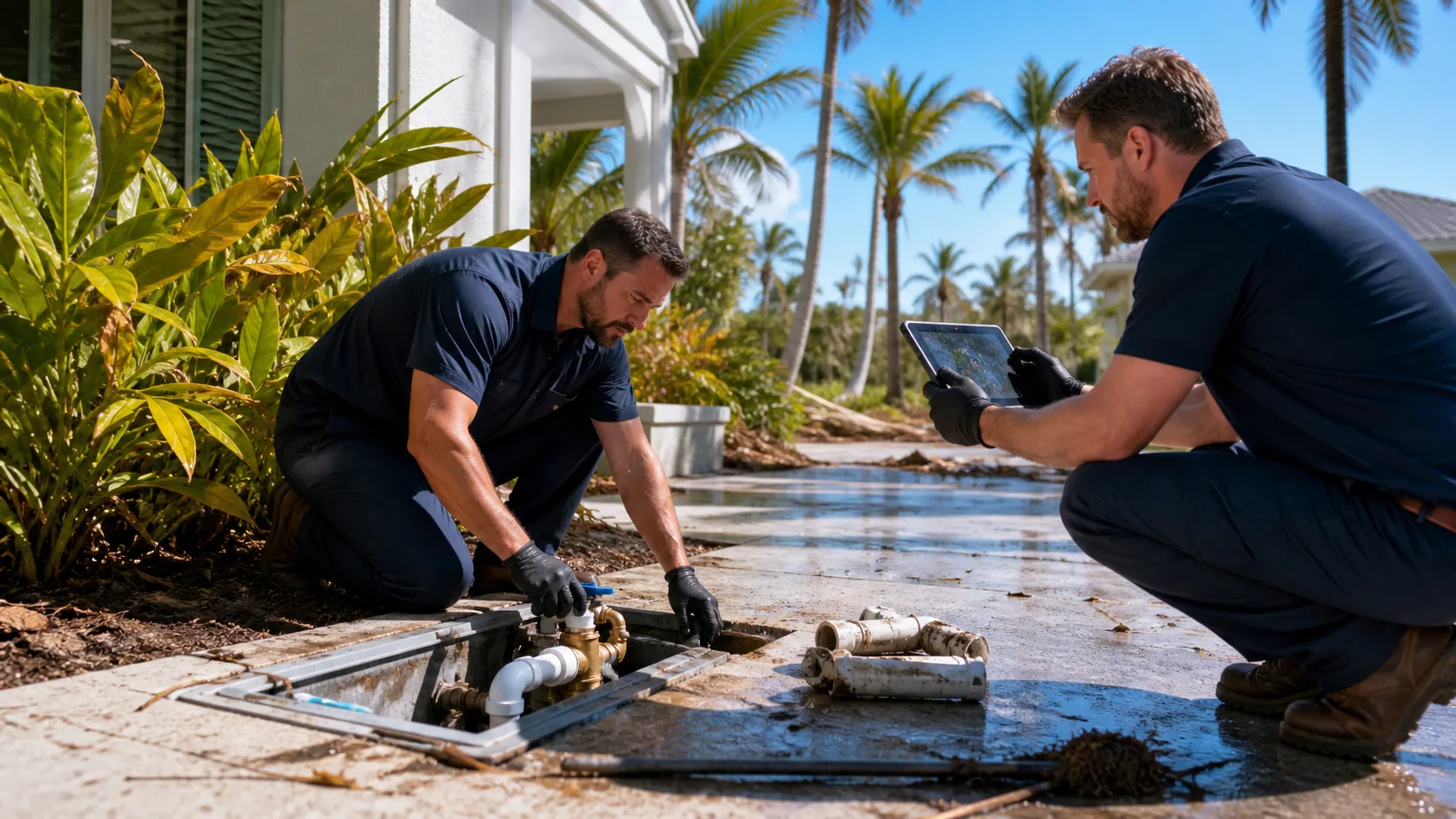
Once things are safe, a licensed emergency plumber in Sanibel should handle the main flushing steps. A careful sequence helps keep dirty water from being pulled deeper into your system.
A typical approach looks like this:
- Inspect the main shutoff and meter for damage before turning water back on
- Open and flush outdoor spigots and hose bibbs first to move out any salty water
- Slowly open interior fixtures, one at a time, watching for discoloration or low pressure
- Check if filters, softeners, or water treatment tanks were flooded or contaminated
In many cases, filters and softener media need to be replaced, not just cleaned. Running fresh water through a damaged filter can spread trapped salt and bacteria to every faucet in the house.
Water heaters and appliances need special care after surge flooding. Saltwater can collect in tanks and small lines and keep causing trouble long after the floor looks dry. Common steps include:
- Draining and inspecting water heater tanks, burners, and electrical components
- Checking for rust at the base of the heater and around relief valves
- Cleaning and sanitizing dishwashers, washing machines, and refrigerator ice lines
- Running sanitizing cycles only after a professional confirms the water supply is safe
Some equipment may be better off replaced if it sat in saltwater or sewage for any period, especially if electrical parts were submerged.
Disinfecting Drains, Toilets, and Septic Safely
Storm surge water is not just salty. It often carries sewage, fuel, chemicals, and mold spores into your drains and toilets. Anything that backed up into floor drains, tubs, or showers should be treated as contaminated.
Key disinfection steps include:
- Removing any standing water from showers, tubs, and low spots around toilets
- Clearing hair, sand, and debris from strainers, traps, and stoppers
- Using EPA-registered disinfectants or a proper bleach solution on hard surfaces
- Allowing disinfectants to sit for the recommended dwell time before rinsing
Products that are too strong or used in heavy amounts can damage rubber seals and fixtures, so it is important to follow label directions and not mix different chemicals. A professional plumber can choose options that are tough on germs but gentle on your plumbing.
For homes on septic or with grinder pumps, surge events are especially hard. Signs of trouble include:
- Slow draining sinks, tubs, or floor drains after water recedes
- Gurgling sounds from toilets or drains
- Wet or soggy areas around the drainfield or septic tank lid
- Strong sewage odors inside or outside the home
Dumping large amounts of bleach or harsh cleaners into a septic system can kill the helpful bacteria that handle normal waste. Instead, a septic professional may need to pump, inspect, and repair tanks and drainfields that were flooded, especially if surge water sat over the system for a long time.
What to Document for Insurance Before Emergency Repairs
Before major repair work starts, take time to document what happened. Good records can make a big difference when you file a claim.
Helpful visual evidence includes:
- Wide shots of each room showing waterlines on walls and furniture
- Close-ups of submerged fixtures, rusted valves, and damaged shutoffs
- Photos or video of pooled water around toilets, showers, and floor drains
- Images of under-sink cabinet damage, swollen wood, or mold growth
- Any visible pipe corrosion or loose connections in accessible areas
Your insurer will usually want clear notes about the storm event and your plumbing. It helps to write down:
- The date and approximate time the storm surge hit
- When you first discovered water inside your home
- A room-by-room list of affected fixtures and appliances
- Model information for water heaters, dishwashers, washers, and refrigerators
- Copies of old invoices for plumbing work or equipment that might need replacement
When you bring in an emergency plumber in Sanibel, ask for:
- Written inspection notes that list what was damaged and why
- Line-item estimates that separate emergency work from long-term upgrades
- Before-and-after repair photos for pipes, heaters, and fixtures
This paperwork can help your adjuster understand what was storm-related damage and what was needed to make your plumbing safe again, which can speed up claim decisions and reduce surprises later.
When to Call A+ Plumbing Professionals in Sanibel
After you turn the water back on and power is restored, pay close attention to how your plumbing behaves. Some warning signs mean you should bring in a professional as soon as possible, not wait for the next rain or high tide.
Watch and listen for:
- Gurgling drains or toilets, especially on lower floors
- Sewer or sulfur odors from sinks, tubs, or yard areas
- Discolored, sandy, or low-pressure tap water
- Toilets that keep running or fail to refill correctly
- Any visible leaks, dripping, or staining on walls and ceilings
A local licensed team that works in Sanibel and Southwest Florida every day understands the way salt air, surge flooding, and high groundwater affect plumbing over time. We know the common failure points in coastal homes and condos and can help you decide which repairs must happen right away and which can be planned before the next hurricane season.
After a surge event, it is smart to arrange a full plumbing inspection, even if everything seems fine at first glance. Many homeowners also ask about preventative upgrades, like improved backwater valves, better cleanout access, and more corrosion-resistant components in low areas of the home. Taking care of these details early can make the next storm easier on both your plumbing and your peace of mind, and at A+ Plumbing Professionals, we are ready to help with emergency response anywhere on Sanibel and across Southwest Florida.
Restore Your Home’s Plumbing With Fast, Reliable Help
When every minute counts, you can rely on A+ Plumbing Professionals to respond quickly and solve the problem the right way. If you need an emergency plumber in Sanibel, we are ready to handle burst pipes, severe leaks, clogged drains, and more. Schedule service now so we can protect your home from further damage and get your plumbing working safely again.