
Dock Line Leaks on Fort Myers Canals Aren’t Just an Eyesore
Dock line plumbing in Fort Myers is simple in idea but tricky in real life. It is the water line that leaves your house or building and runs out toward the canal. It may feed a fish cleaning station, a boat lift, a wash-down hose bib, or a small sink on the dock. Most of that piping is buried, tucked under pavers, or hidden along the seawall where you do not see it every day.
When a dock line leaks, it is not just a small drip into the water. Those hidden leaks can send treated water straight into the canal, quietly raise your utility bill, soften soil, and weaken dock framing or seawall caps. Over time, that extra moisture can stain decks, rot wood, and speed up erosion along the edge of the canal.
Summer makes it worse. Long days, heavy irrigation, more boat trips, and constant hose use all add up. If there is a weak spot in your dock plumbing, this is when it often shows up. Catching problems early helps protect both your property and your water bill.
Spotting Hidden Dock Line Plumbing Red Flags
You may not be able to see the pipe, but the area around it will tell on it. Around Fort Myers canals, we see a lot of the same warning signs when dock line plumbing starts to fail.
Watch for things you can see or touch:
- Soggy or spongy spots near the seawall that never seem to dry
- Pavers that stay dark and damp along one line or corner
- Green or slimy algae blooming heavier than normal near your dock
- Water trickling from pilings or boards when no fixtures are running
There are also signs you only notice if you pay attention to how your water system feels and sounds:
- A sudden jump in the water bill without a clear reason
- Hissing, rushing, or faint spraying sounds near buried lines
- Intermittent low pressure at the dock or even inside the house
- Air sputtering from waterfront hose bibs when you turn them on
Canal conditions can make all this harder to spot. Tides rise and fall, wakes from boat traffic slap the seawall, and salt water eats at metal parts. Those forces can hide a small leak for a while or push a minor issue into a bigger failure faster than you expect. If something around your dock seems “off,” it is worth paying attention.
How to Use a Simple Meter Test Before Calling a Pro
One of the easiest ways to check for a hidden leak is with a basic water meter test. You are not digging, and you are not opening any plumbing. You are just watching what your meter does when things should be still.
Here is a simple process many homeowners follow:
- Turn off all fixtures inside and outside the building
- Make sure the washing machine, dishwasher, and ice maker are not filling
- Shut off irrigation and any pool autofill that uses city water
- Find your water meter and note the current reading or take a clear photo
Most meters have a small dial or leak indicator. When everything is off, that dial should stop. If it still turns, water is moving somewhere in the system. Watch it for 10 to 15 minutes.
To check if the leak might be on the dock line branch, some owners go one step further:
- Close the main shutoff valve for the building
- Leave the dock line valve in its normal position
- Check the meter again for movement
- Then close the valve feeding the dock line and check the meter one more time
What the meter does can tell you a lot:
- Very slow movement can point to a small underground seep
- Fast spinning usually means a larger break or open flow
- A change when you close the dock line valve suggests the problem is out near the dock
If you do a test like this, it helps to write down the time and meter reading or take photos. That information can make it easier for a plumbing team to understand what is going on when they arrive.
Common Dock Line Failures on Fort Myers Waterfronts
Dock line plumbing in Fort Myers has some predictable weak spots. The canal setting is beautiful, but it can be hard on pipes and fittings.
Common failure areas we see on local waterfronts include:
- Corroded copper lines that were buried under pavers or concrete
- Cracked PVC near the seawall where movement and sun hit hardest
- Fittings that get stressed each time a boat rocks or a lift moves
- Pipes laid in soft soil that slowly settle and bend out of shape
The environment adds to the stress. Strong sun can break down exposed plastic parts and gaskets. Salt in the air and water can speed up corrosion on metal pipes and hose bibs. In rough weather, boats can bump pilings, and floating docks can twist just enough to strain the plumbing strapped to them.
Age and past work also matter. Many canal homes still have original dock piping from older builds. Through the years, owners may have added extra hose bibs, fish cleaning sinks, or short runs of pipe without proper permits or planning. That mix of old and new materials, indoor style fittings used outside, or lines without good pressure control can lead to trouble down the line.
When DIY Stops and a Fort Myers Pro Should Step in
There is a line between checking for clues and trying to fix a dock leak on your own. Most canal-side plumbing work is better handled by an experienced professional who understands both plumbing and waterfront structures.
Clear signs that you should bring in a plumber include:
- The water meter keeps spinning even with all visible valves shut
- You notice steady bubbles or ripples in the canal near your dock
- Pavers or decking near the seawall are sinking or shifting quickly
- Water starts intruding into a boathouse, storage room, or lower-level space
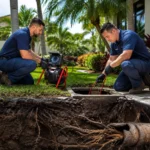
Dock line leak detection on a canal is not the same as a simple indoor repair. Professionals use acoustic tools, line tracing equipment, and safe isolation methods to find the true source of the leak without tearing everything apart. They also understand local rules that apply when piping crosses or attaches to a dock or seawall.
A+ Plumbing Professionals works on residential and commercial plumbing in Fort Myers and across Southwest Florida, including waterfront and dock line problems. When needed, we can coordinate with dock builders or seawall contractors so structural repairs and plumbing fixes line up the right way.
Protect Your Dock Line Investment Before the Next Boating Season
Dock line plumbing is an investment, just like the dock and lift it serves. A little attention between busy boating seasons can help you avoid big headaches when friends and guests show up ready for a day on the water.
Many local owners find it helpful to keep a simple yearly checklist:
- Do a quick meter check when everything is off
- Take a slow walk along the dock, seawall, and any waterfront paths
- Turn each waterfront hose bib on and off and feel for pressure changes
- Look for new staining, rust, soft spots, or shifted pavers
A late summer or early fall inspection gives you time to catch leaks and worn parts before the next wave of visitors and weekend boat trips. With careful maintenance and prompt repairs, your dock line plumbing in Fort Myers can stay reliable, protect your property, and keep your water where it belongs.
Get Started With Your Project Today
If you are planning new construction, upgrades, or repairs near the water, we are ready to help you protect your property with reliable dock line plumbing in Fort Myers. At A+ Plumbing Professionals, we listen to your goals, evaluate your system, and recommend solutions that fit your budget and timeline. Reach out to our team today so we can schedule a convenient visit, answer your questions, and get your project moving in the right direction.